Mythic · fiction · Outer solar system (allegedly)
Nibiru
A 20th-century invention, not an ancient one
- Era
- Coined in its modern sense by Zecharia Sitchin, 1976
- Region
- Outer solar system (allegedly)
What it was
Nibiru, in real Babylonian astronomy, is simply the Akkadian name for a celestial body associated with the god Marduk - usually identified by modern scholars with the planet Jupiter, or with whatever bright star or planet rose near the celestial equator at a given moment. The word means 'crossing' or 'ferry.'
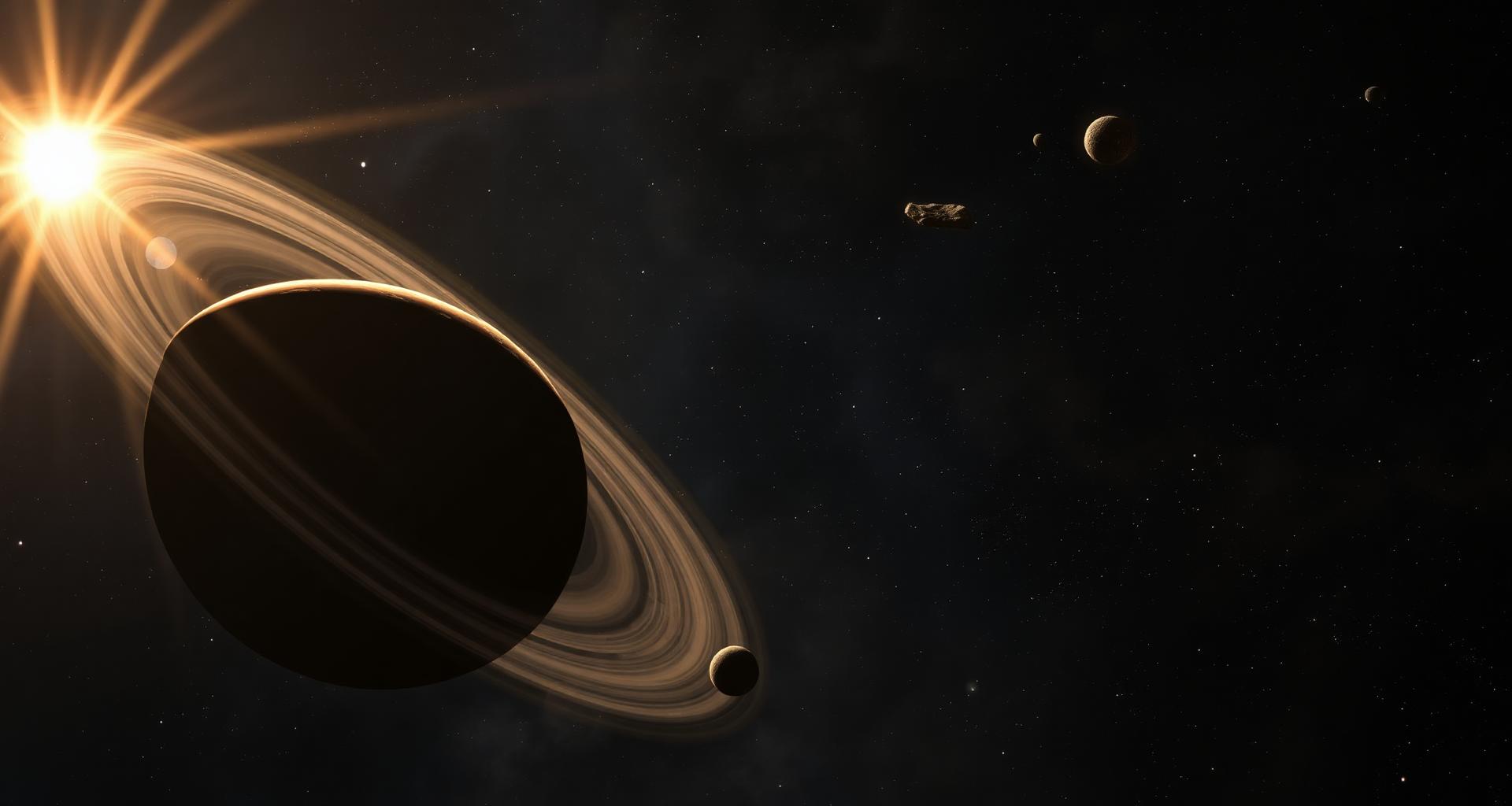
The modern 'Nibiru' - a hidden twelfth planet on a 3,600-year elliptical orbit, home to an advanced civilization called the Anunnaki who genetically engineered humans on Earth as miners of gold - is the work of the writer Zecharia Sitchin, who introduced it in 'The 12th Planet' (1976) and developed it across a long series of subsequent books.
Sitchin's reading depends on translations of Sumerian and Akkadian tablets that Assyriologists, working from the same originals, reject as not justified by the text. The actual Anunnaki of the Sumerian tablets are gods - the elder generation of the pantheon, the children of An and Ki - and there is nothing in any tablet that calls them spacefarers, identifies them with a planet beyond Pluto, or describes the engineering of humans for mining.
A day here
From dawn until the lamps go out
There is no 'day in the life of Nibiru' to write because there is no Nibiru in the sense Sitchin meant. The page exists so that when someone arrives looking for it, they find the actual history alongside the claim, and can judge for themselves.
If you are reading Sumerian or Akkadian tablets, the Anunnaki you meet are gods, with temples, festivals, hymns, and statues. They eat the bread and drink the beer placed before them by priests. They settle quarrels by sending dreams. They are not described arriving in ships or wearing technology. They behave exactly as ancient Near Eastern gods behave in every other context.
What the texts do show - and it is genuinely wild without being aliens - is a civilization that, by 2000 BCE, was already writing systematic astronomy, running schools of mathematics, codifying laws, and producing literature that we still read.
The architecture
How it was built
The people
Who lived here
There is no archaeological, astronomical, or textual evidence for a tenth/twelfth planet on a 3,600-year orbit. NASA has searched repeatedly for hypothetical outer planets and found nothing of the kind. Predicted 'arrivals' of Nibiru (notably 2003 and 2012) have come and gone.
The actual Anunnaki appear in dozens of Sumerian and Akkadian compositions, including several featured on the Tablets page of this site (Atrahasis, the Eridu Genesis). Reading those texts in good translations is the best correction to the modern story.
This page exists because we will not pretend Nibiru is real, and we will not pretend nobody asks about it. Both would be dishonest.
What's real
The Akkadian word nibiru, attested in real astronomical tablets, identifying a bright crossing star (most likely Jupiter). The real Anunnaki of the Sumerian pantheon.
What's reconstructed
Nothing - there is nothing of a 'planet Nibiru' to reconstruct, because the modern claim has no ancient basis.
What's invented
The entire 1970s Sitchin reading: the twelfth planet, the 3,600-year orbit, the genetic engineering of humans for gold mining, the connection between Nibiru and the Anunnaki. All invented by one modern author.
Sources & further reading
- Sitchin, Z. - The 12th Planet (1976) - the source of the modern claim
- Heiser, M.S. - The Myth of a Sumerian 12th Planet (peer-reviewed rebuttal, multiple essays)
- Lambert, W.G. - Babylonian Creation Myths (2013) on the real astronomical Nibiru
- NASA - public statements on 'Nibiru/Planet X' claims (2012, 2017)