Real place · Upper Egypt, on the Nile (modern Luxor)
Luxor (Thebes)
The city of Amun-Ra, capital of the New Kingdom
- Era
- Egyptian capital c. 2000 BCE; New Kingdom peak c. 1550–1070 BCE, especially under Hatshepsut, Thutmose III, Amenhotep III, and Ramesses II
- Region
- Upper Egypt, on the Nile (modern Luxor)
- At its peak
- Around 80,000 at the height of the New Kingdom
- Language
- Late Egyptian (spoken); Middle Egyptian (formal, written)
What it was
What modern travelers call Luxor was, to its inhabitants, Waset - what the Greeks much later renamed Thebes. From the early New Kingdom until the late Bronze Age collapse, it was the religious and royal heart of Egypt at its imperial peak.
The east bank was for the living: the colossal temple complex of Karnak, sacred to Amun-Ra; the smaller Luxor temple two and a half kilometers south, linked to Karnak by an avenue of sphinxes; the royal palaces; and the densely-packed city itself, of which little remains.
The west bank was for the dead. The mortuary temples of Hatshepsut, Ramesses II, Ramesses III and others; the village of tomb-cutters at Deir el-Medina (whose private letters and grocery lists we still read); and the great hidden valleys - the Valley of the Kings and the Valley of the Queens - where the pharaohs were buried in the hope that anonymity might do what pyramids had failed to do, and keep them undisturbed.
A day here
From dawn until the lamps go out
You wake in a mudbrick house in the eastern quarter of Waset, to the sound of the muezzin's much-later successor - in your time, a priest's horn calling the dawn service at Karnak. Breakfast is a flat round of emmer-wheat bread, beer brewed in your courtyard, white cheese, and a fig.
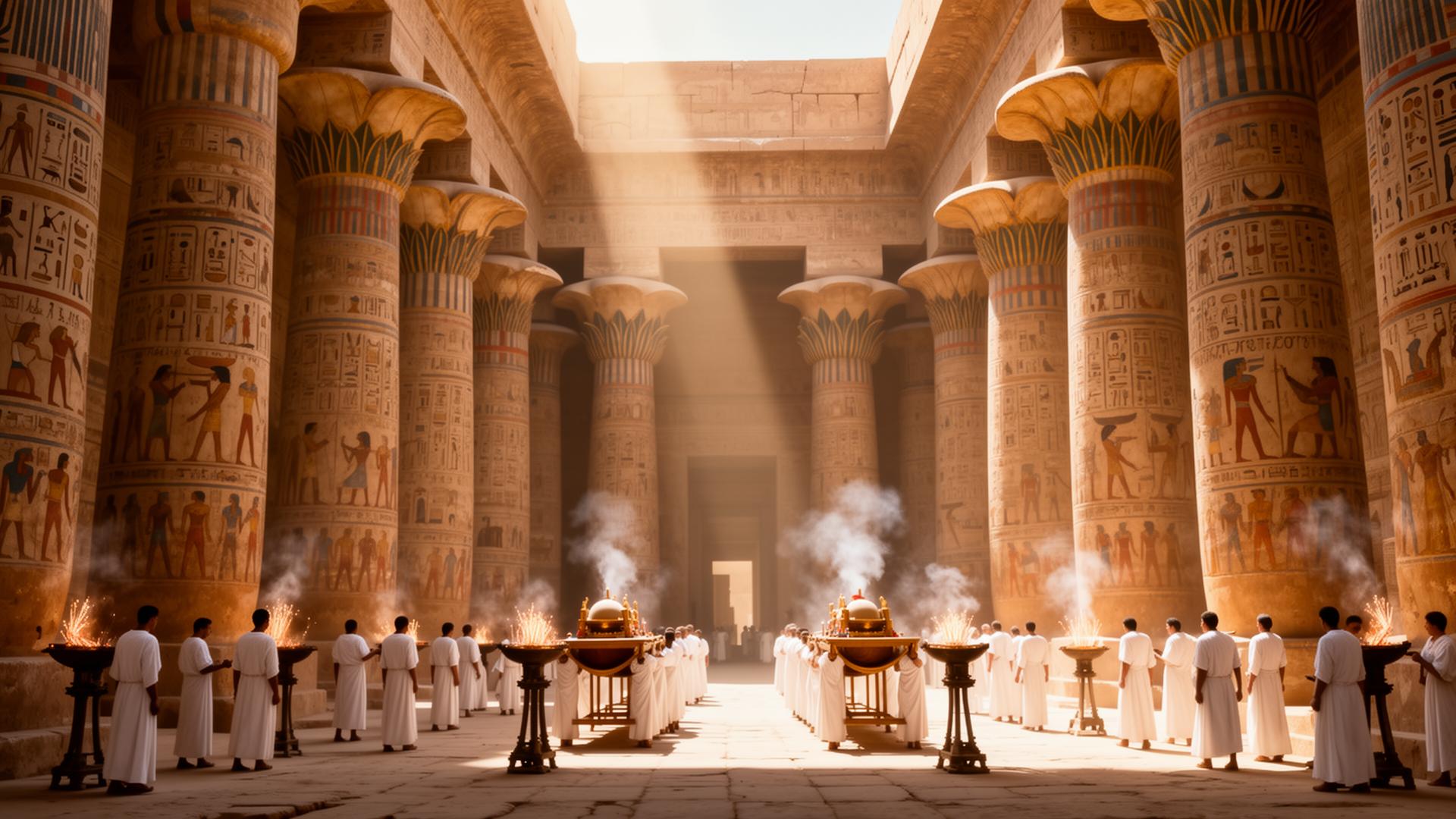
By mid-morning you cross to the temple precinct. The avenue of ram-headed sphinxes goes on for what feels like a kilometer. You hear pilgrims muttering prayers; you smell kyphi incense and the river. Inside the great hypostyle hall the painted columns are so wide it takes six men holding hands to encircle one, and they soar so high that the carved hieroglyphs at the top are almost invisible.
Lunch in the suburb of the artisans: roast goose with cumin and coriander, lentils, cucumbers, more beer, a handful of dates and a small honey cake. The talk is about the size of the harvest, the rumor of a Hittite envoy at court, and the gossip from a tomb-cutters' strike at Deir el-Medina last month.
Afternoon you cross the river by ferry to the western bank. In the workshops you watch a craftsman painting a wooden coffin in red, white, blue, and gold - the colors will outlive him by three thousand years.
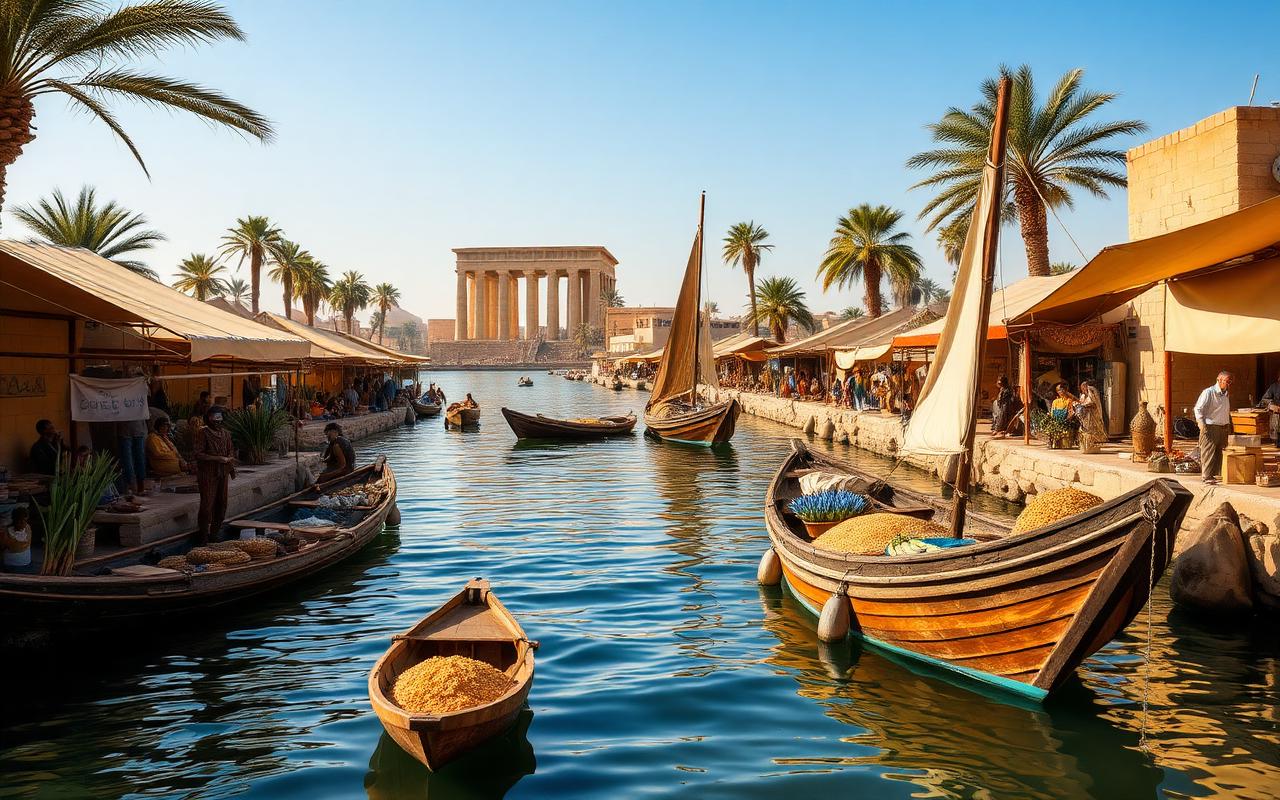
Evening on a flat roof. Geese cross the orange sky. A boat slips downriver under a sail the color of pale flax. You drink a cup of date wine and watch the western cliffs go violet. Somewhere up in the valley, the diggers are sealing another tomb shaft for the night.
The architecture
How it was built
The people
Who lived here
At the top: pharaoh, the royal family, and a vast priesthood of Amun centered on Karnak. By the late New Kingdom the high priest of Amun owned a substantial share of all the arable land in Egypt - a structural problem that helped break the kingdom apart.
Below them, the army officers, the scribal bureaucracy, the temple staff. Below them, a vast working population of farmers, fishermen, brewers (largely women), boatmen, and craftsmen. The village of Deir el-Medina - the artisans who cut and decorated the royal tombs - has left some of the most intimate documents from any ancient society: love poems, grocery lists, court cases, even the world's first attested labor strike under Ramesses III.
Slavery existed but was a smaller share of the workforce than in classical Rome; many were prisoners of war from the Levant. Foreigners - Nubians, Libyans, Asiatics - lived in their own quarters and were visible in temple reliefs.
What's real
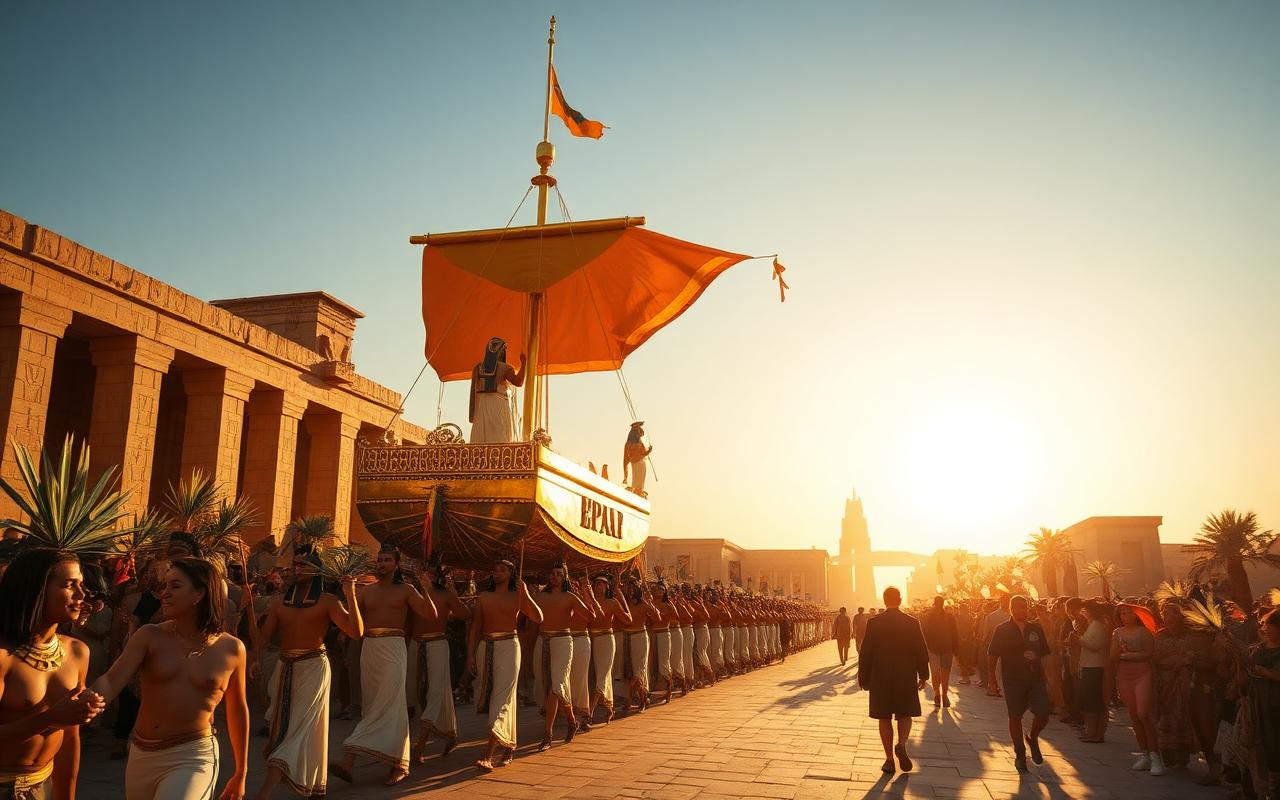
Karnak and Luxor temples (still standing), the Valley of the Kings, the Deir el-Medina archives, the mummies and funerary equipment in the Cairo and Luxor museums, the Opet festival (reliefs at Luxor describe it in detail), the strike of year 29 of Ramesses III (Papyrus Turin 1880).
What's reconstructed
The exact population, the everyday sound and smell of the city, the look of the now-vanished royal palace, the original paint colors on most temple reliefs (much survives, but most has faded).
What's invented
Nothing here.
Sources & further reading
- Wilkinson, R.H. - The Complete Temples of Ancient Egypt (2000)
- Romer, J. - Ancient Lives: Daily Life in Egypt of the Pharaohs (1984)
- McDowell, A.G. - Village Life in Ancient Egypt: Laundry Lists and Love Songs (1999)
- Cline, E.H. - 1177 B.C.: The Year Civilization Collapsed (rev. 2021)