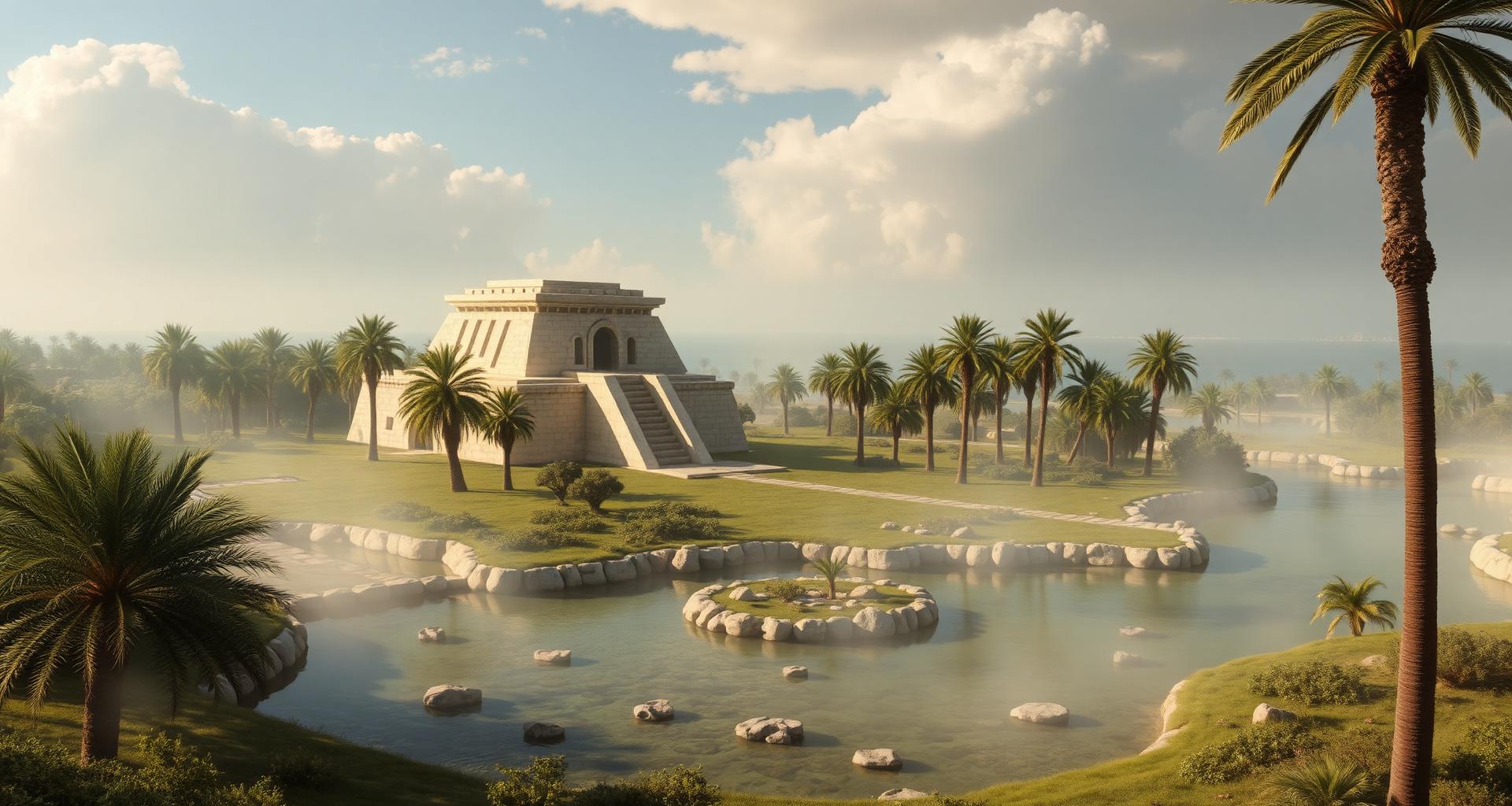
Contested · Sumerian mythic geography; very likely modern Bahrain and adjacent coast
Dilmun
The Sumerian paradise that may have been a real place - Bahrain
- Era
- Mentioned in Sumerian texts from c. 3000 BCE; in archaeological reality, a Bronze Age trading hub c. 2200–1700 BCE
- Region
- Sumerian mythic geography; very likely modern Bahrain and adjacent coast
What it was
Dilmun has two faces. In Sumerian mythological texts - most famously the poem Enki and Ninhursaĝa - it is a primordial paradise where 'the lion does not kill, the wolf does not snatch the lamb,' where no one falls ill and no one ages, where the only thing missing is fresh water (until Enki provides it).
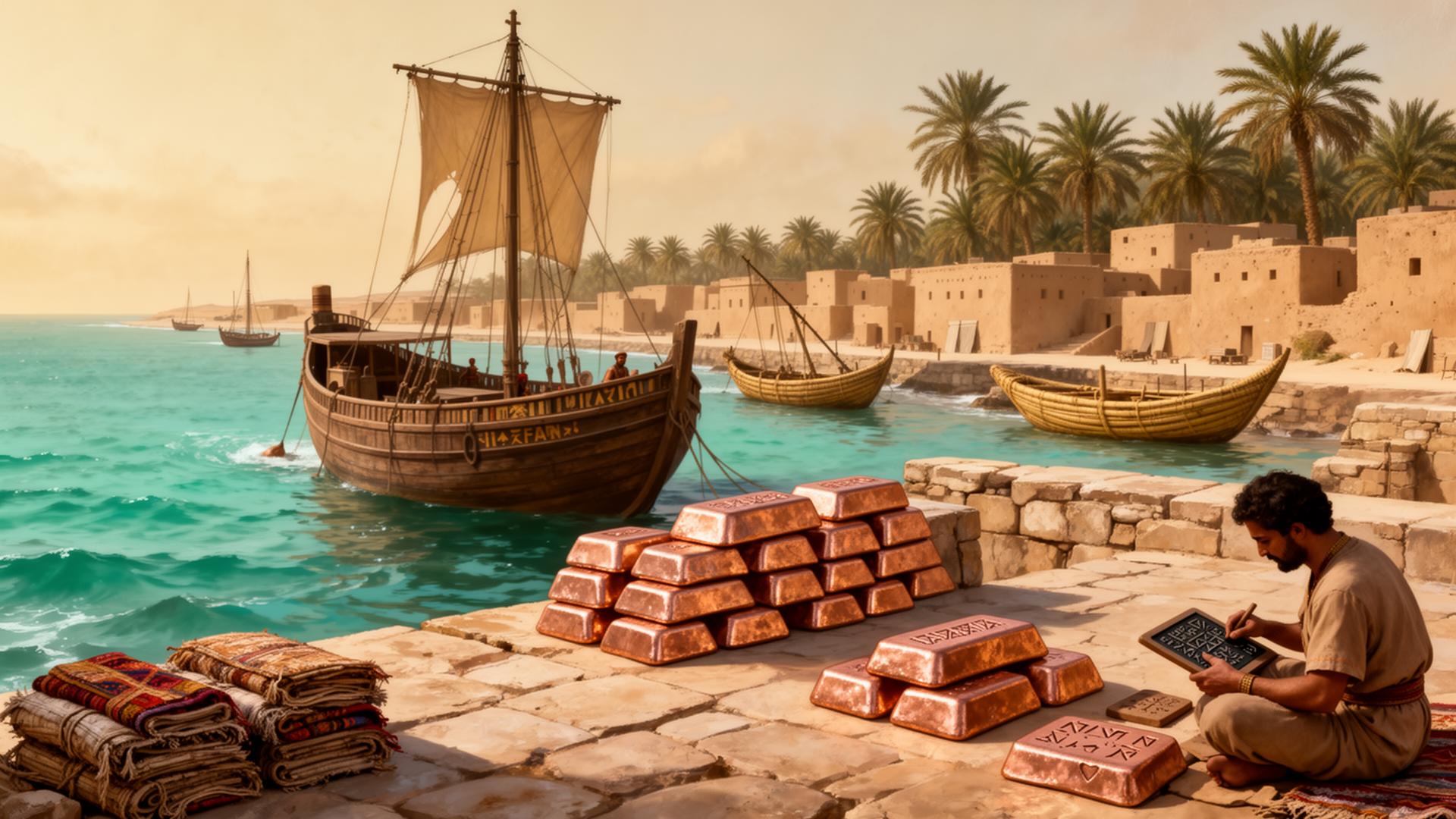
But Dilmun was also a real trading civilization, and a fairly well documented one. By the early second millennium BCE, ships from Dilmun were carrying copper from Oman, beads, and timber up the Persian Gulf to Ur and Eridu, and Sumerian merchants were keeping accounts of their Dilmun voyages on clay tablets we still have. Archaeology on Bahrain has turned up several Bronze Age cities, an enormous burial field of tens of thousands of mounds, and a temple complex at Barbar.
So Dilmun is both an idealized mythic paradise and a real trading hub. The two senses probably reinforced each other: the wealth and exoticism of the real Bahrain made it a natural location for the myth, and the myth in turn made the real Dilmun glamorous. This page treats both.
A day here
From dawn until the lamps go out
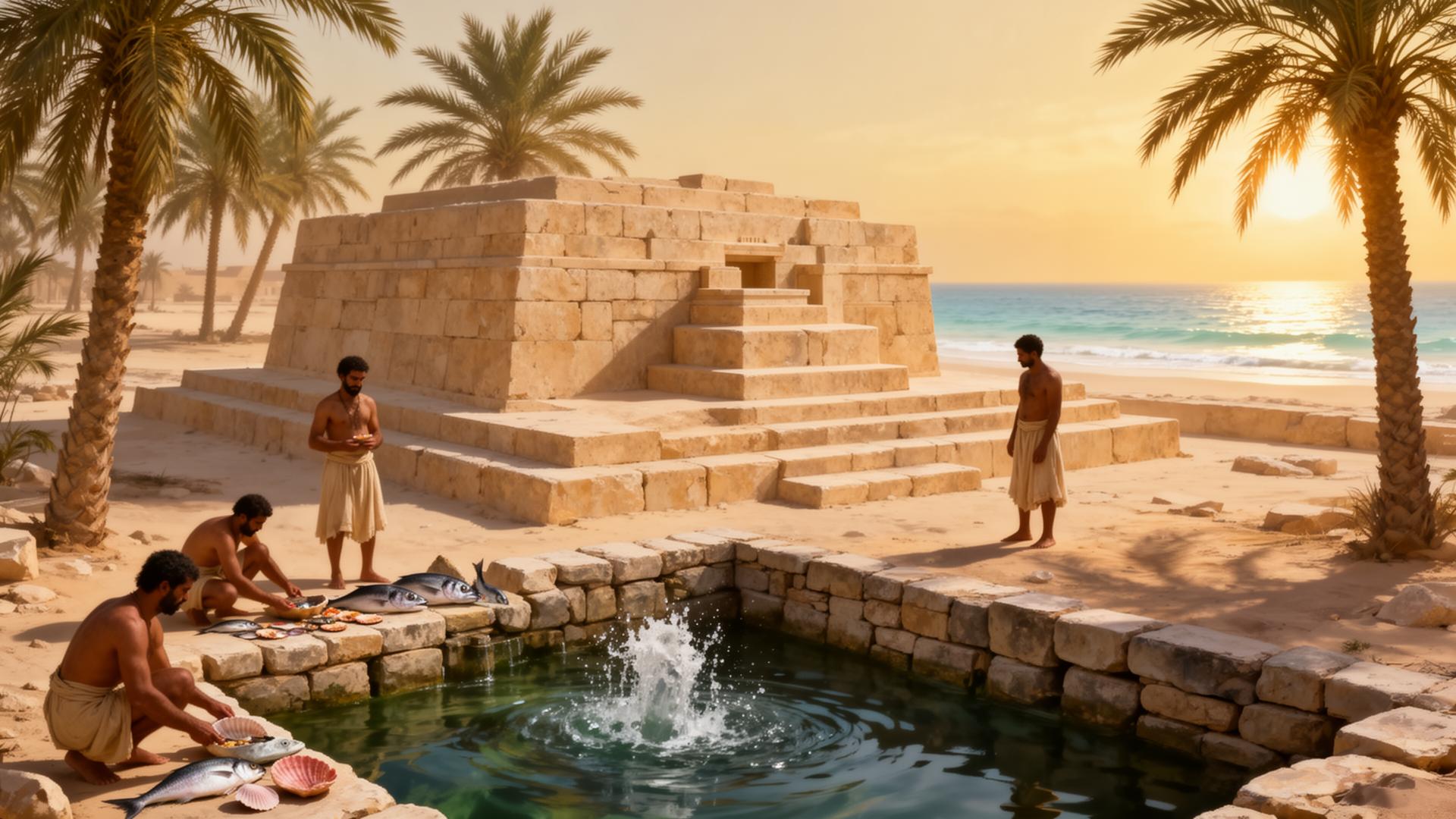
Real, c. 2000 BCE, on Bahrain: you wake in a date-palm courtyard near the harbor of what archaeologists now call Qal'at al-Bahrain. The Gulf smells of salt and pearl-fishing. Breakfast is dates, soft white cheese made from goat's milk, flatbread, and water from one of the island's many freshwater springs (which the Sumerians knew came up through the seawater - they marveled at it).
Midday you walk down to the harbor. A round Sumerian merchant ship is being unloaded - Ur-Nanshe of Ur sends a list of textiles, oil, and silver; you weigh out copper ingots from Oman in return. A scribe records the deal on a small clay tablet that, four thousand years later, will be sitting in the Penn Museum.
Afternoon at the temple of Inzak (the chief god of Dilmun, equated by the Sumerians with their own Enzag). You make a small offering - a few grains of incense, a clay figurine - and walk back through the necropolis on the rise, where the burial mounds run to the horizon, each one a small chambered tomb under packed earth and limestone.
Mythic, in the same place: you do not age. The lion lies down. The dove does not raise a cry of mourning. The springs that Enki opened still flow. The poet Enheduanna, hundreds of years later in Ur, will still know your island as the place where the world began.
The architecture
How it was built
The people
Who lived here
The real Dilmun was a multilingual trading society sitting between Mesopotamia, Iran, and the Indus Valley. Goods, scripts (a few Indus-script seals have been found there), and gods moved through it. Inzak, the chief god, has both Sumerian and probably local roots.
The mythic Dilmun in Enki and Ninhursaĝa is the setting for a long, strange, and occasionally bawdy story about Enki, eight illnesses, and a pun on the Sumerian sign TI (𒋾) - which means both 'rib' and 'life,' and which Thorkild Jacobsen and others have argued is the deep background to the biblical Eve being made from Adam's rib.
Whether the Sumerians thought of Dilmun primarily as a real place that was also a paradise, or primarily as a paradise that happened also to be a real place, is the kind of question their texts don't quite let us answer cleanly. Both readings are honest.
What's real
Bronze Age Dilmun on Bahrain: cities at Qal'at al-Bahrain and Saar, the temple at Barbar, the great burial mound field, Sumerian trade tablets recording Dilmun voyages. All excavated and dated.
What's reconstructed
The day-to-day life of a Dilmun trader is reconstructed from those tablets and from the archaeology; the exact political structure is not fully clear.
What's invented
The paradise of Enki and Ninhursaĝa is mythic - but it is genuine ancient myth, not a modern invention. The connection to the rib/life pun and the Eden story is a scholarly proposal, not a claim of fact.
Sources & further reading
- Crawford, H. - Dilmun and Its Gulf Neighbours (1998)
- Bibby, G. - Looking for Dilmun (1969, classic narrative account)
- ETCSL - Enki and Ninhursaĝa (t.1.1.1)
- Jacobsen, T. - The Treasures of Darkness (1976)